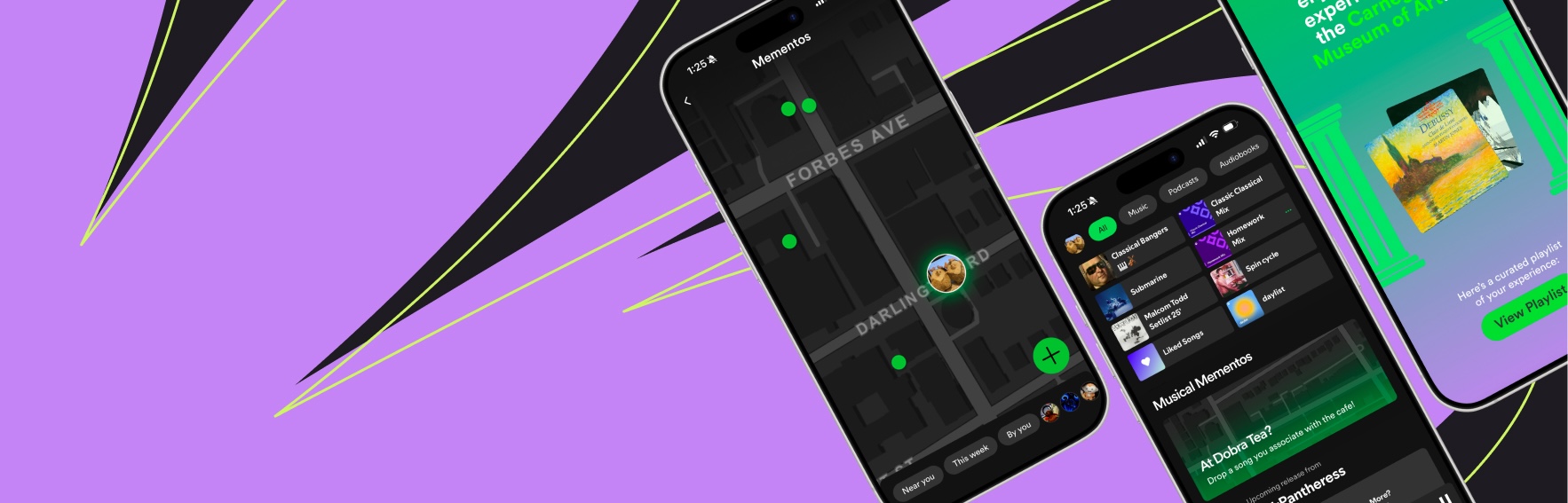
The future of audio discovery?
Spotify is at the center of how people connect with music, podcasts, and creators. But discovery today is still largely screen-based: playlists, search, algorithmic feeds. What happens when screens become less central?
We were tasked to explore opportunities for design, product, and user experience.
We had the opportunity to present this concept to Spotify’s Head of Design for Video & Audio Podcast Creators and received positive feedback on the overall direction and system-level thinking.
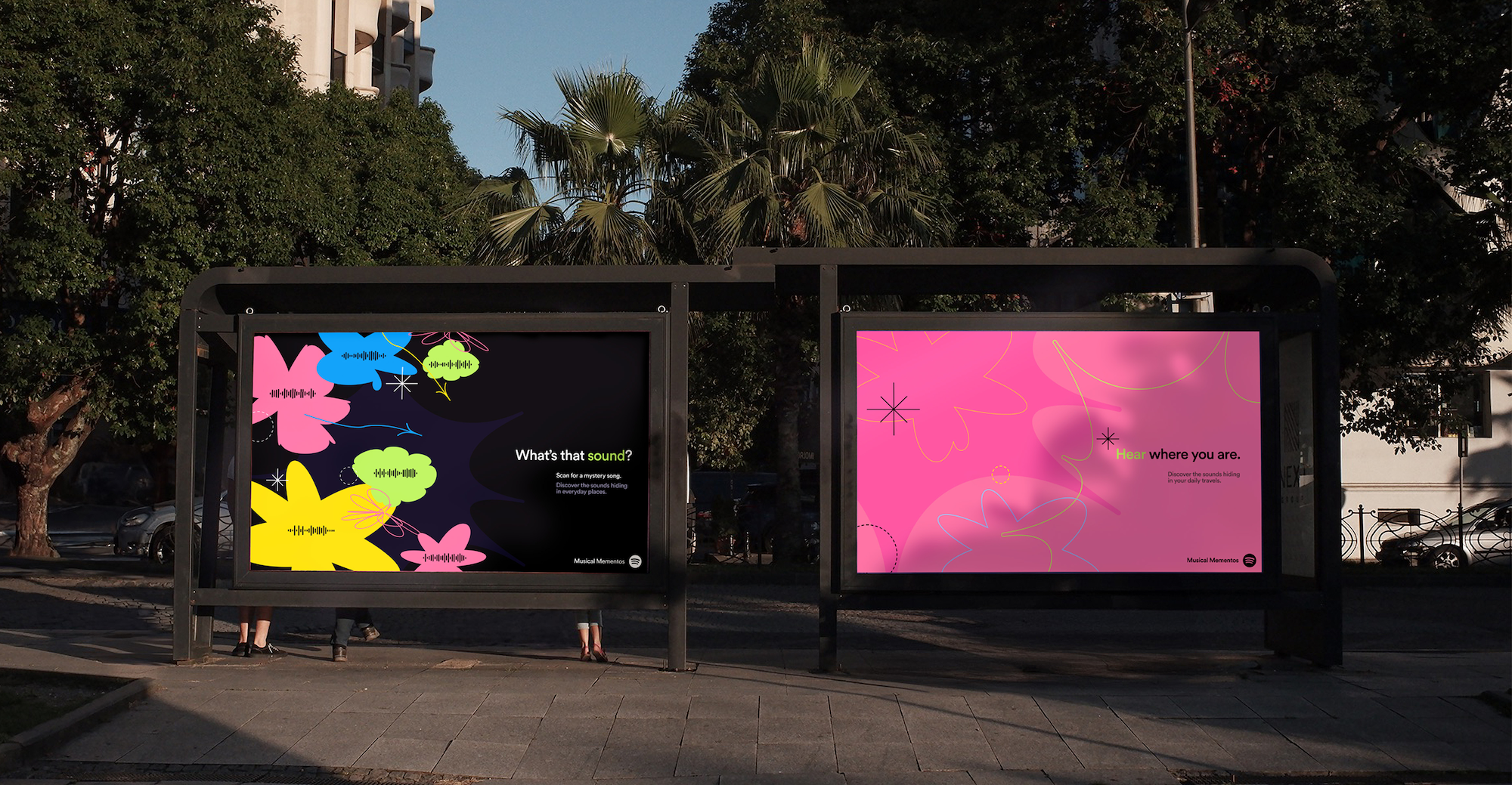
I work on research and ideation, establishing the visual and conceptual direction of the project across all components. I led the design and execution of the marketing posters that introduce the system to a larger audience.
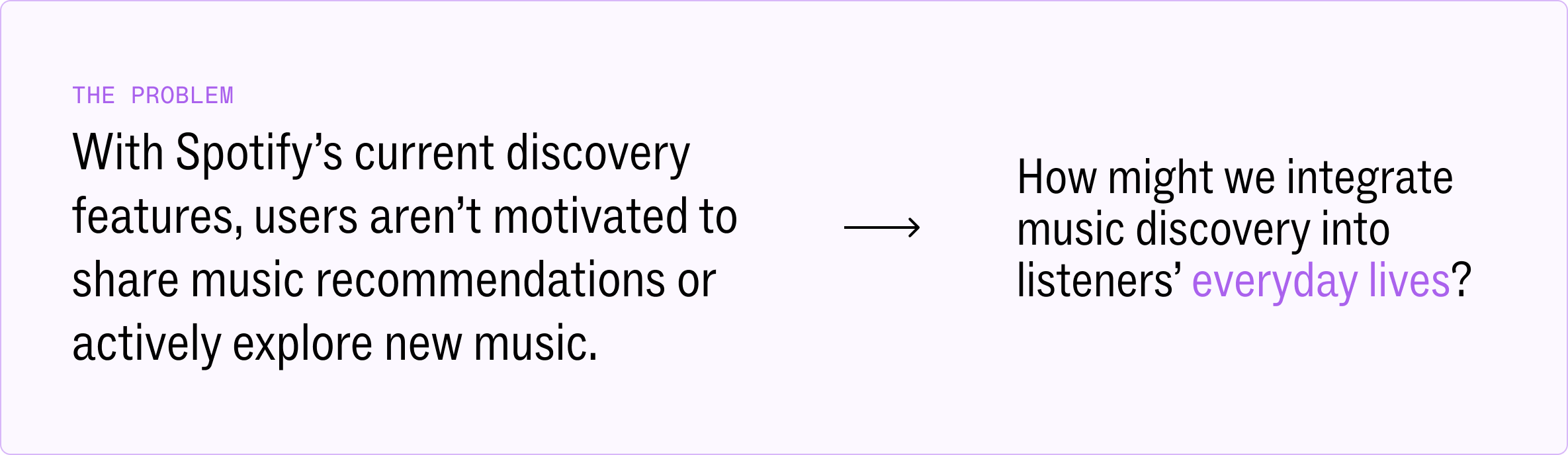
Leaving Mementos: Location-based audio exploration
Our 3-part solution, consisting of an app feature, a museum-based event campaign, and the marketing strategy to ease users into the idea that where you are influences what you hear. The campaign expands from a single in-app feature into a cultural and public experience.
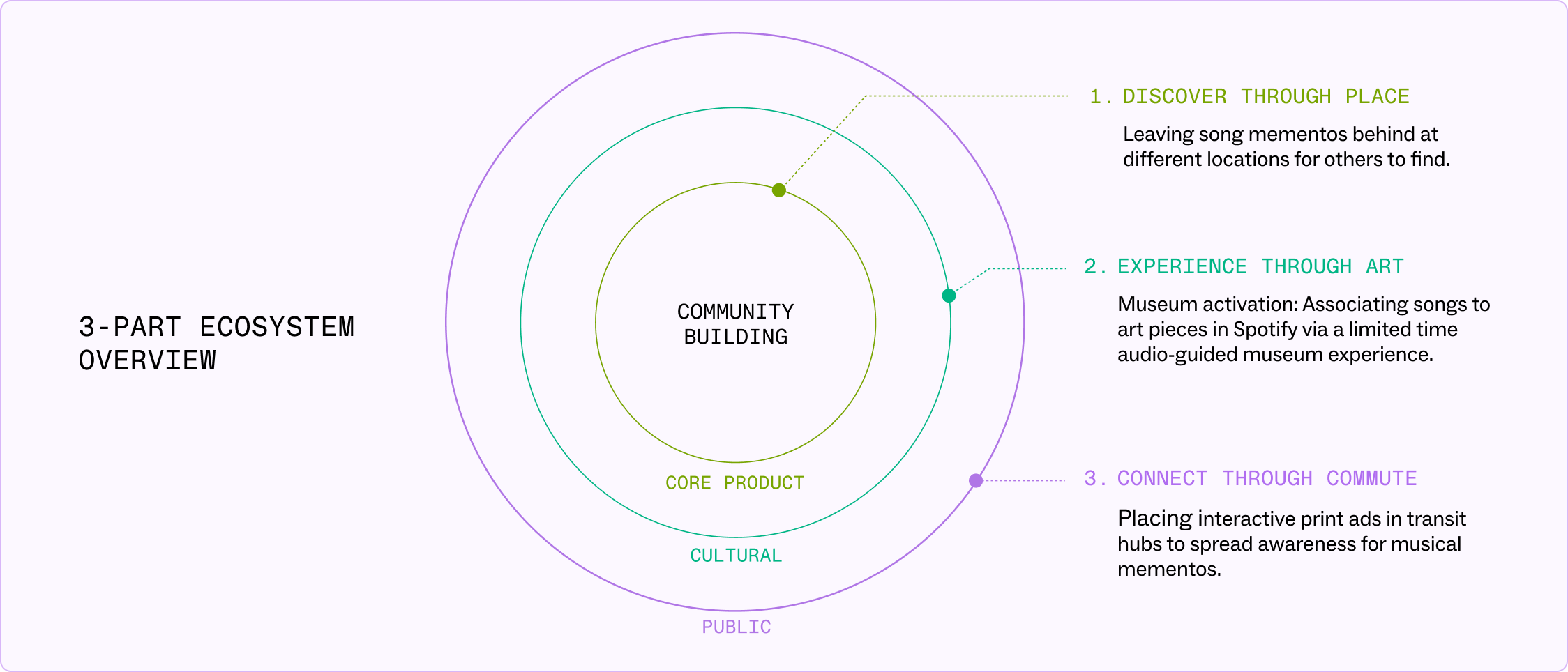
[1] IN-APP FEATURE
Users can leave song mementos behind after visiting different public spaces, like cafés, theaters, etc., for others to find. Musical mementos allows users to build community through sharing songs with strangers while expanding their musical tastes during their daily routine.
At the end of a visit to a specific location (e.g. a coffee shop, gym, restaurant, etc.), users can share out a song recommendation to future visitors.
After sharing a song, users receive a recommendation that a past visitor shared. After listening to a snippet, users can choose to like (add to their library) or dislike (receive another).
Users receive a notification if another visitor liked a recommendation they previously made.
In the memento map, users can view past mementos dropped by their Spotify friends. Filters help narrow down the search.
[2] MUSEUM CAMPAIGN
A limited exhibition at a museum that pairs specific pieces of art with songs, so that each artwork is associated with its own piece of music. As a visitor moves through the space, the audio transitions seamlessly, creating a dynamic soundtrack tied to the environment.
As the song plays, the visitor can read about its connection to the artwork.
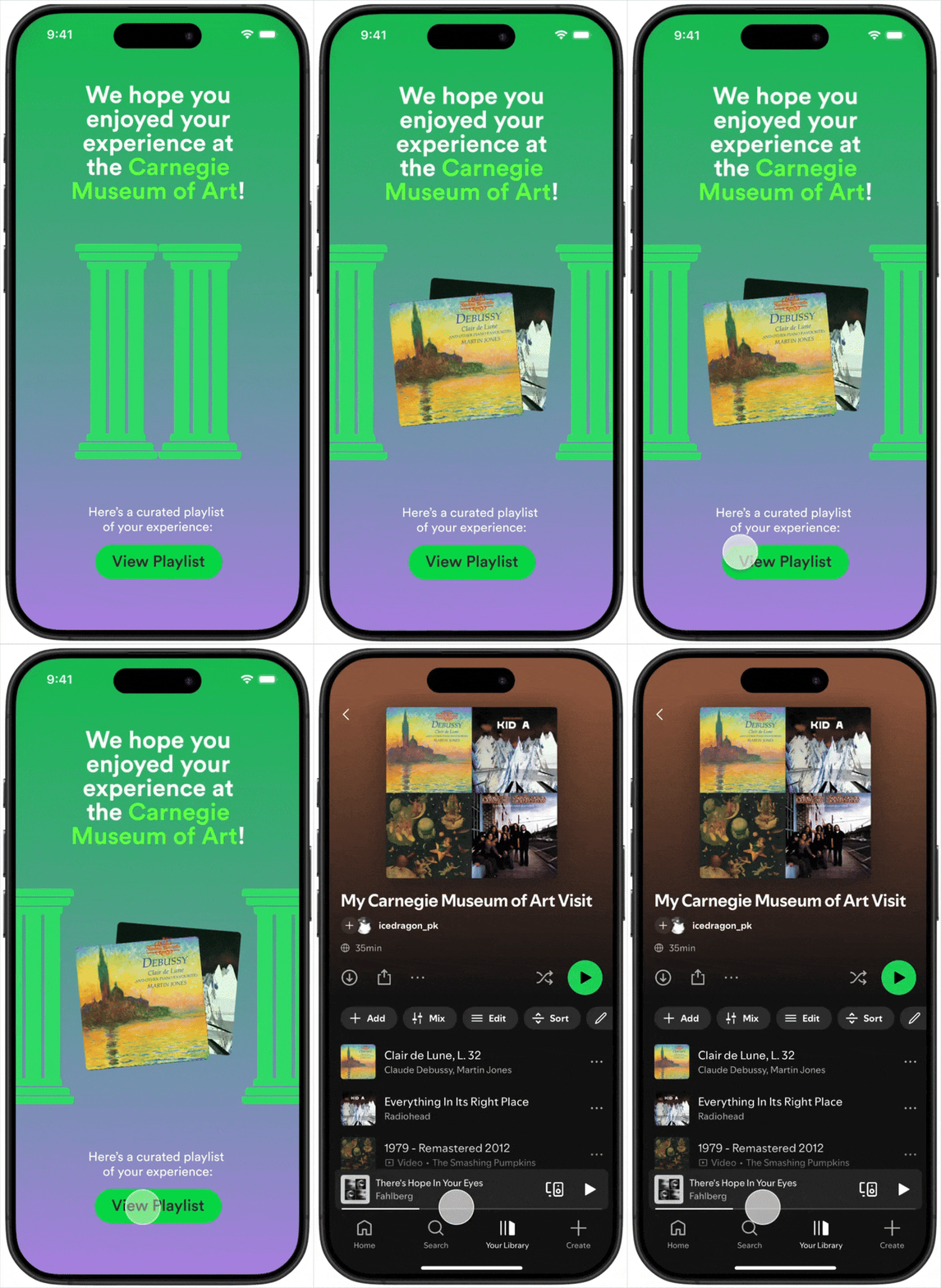
At the end of the visit, the user receives a
curated playlist of the songs they discovered throughout the museum.
[3] MARKETING STRATEGY
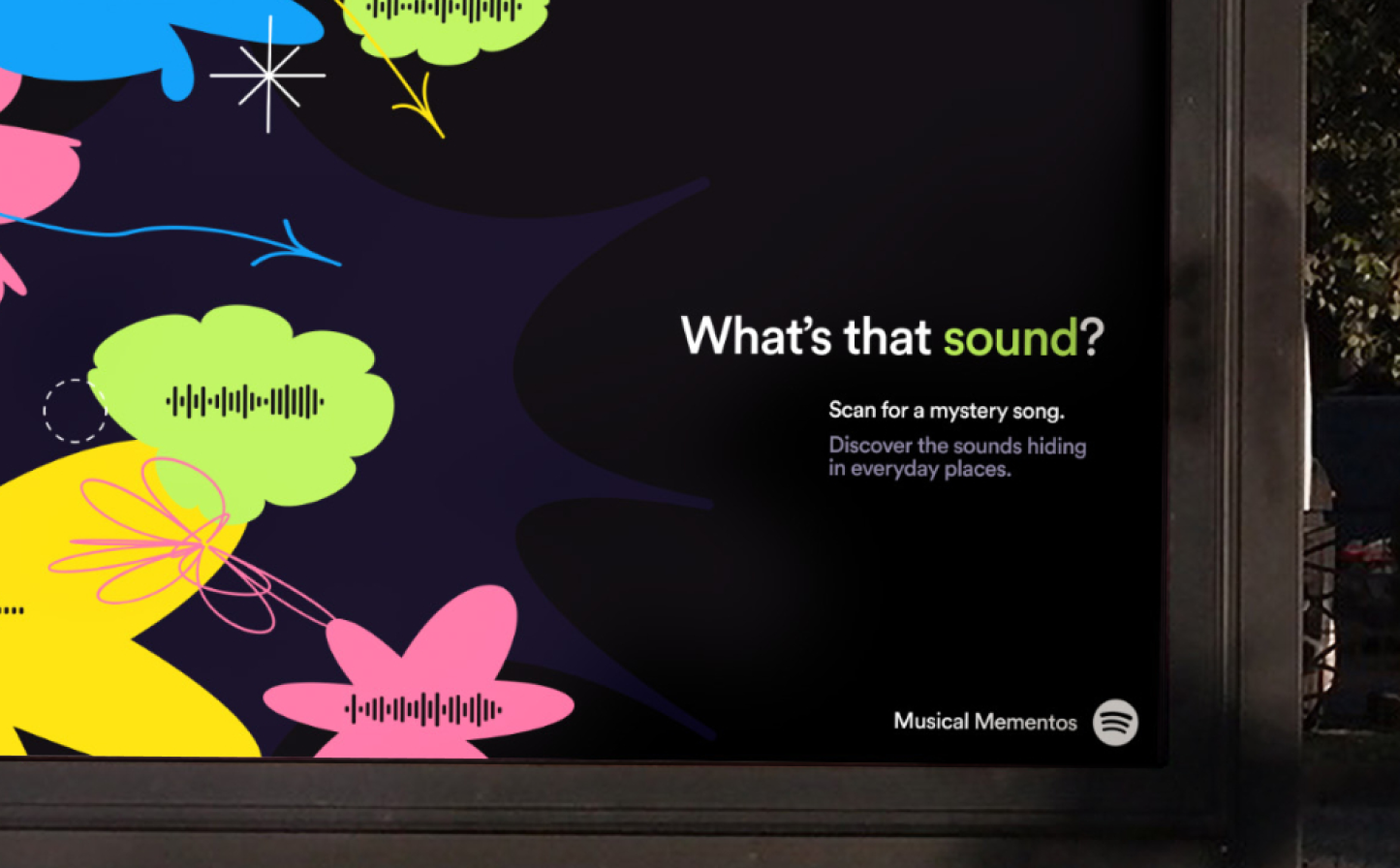
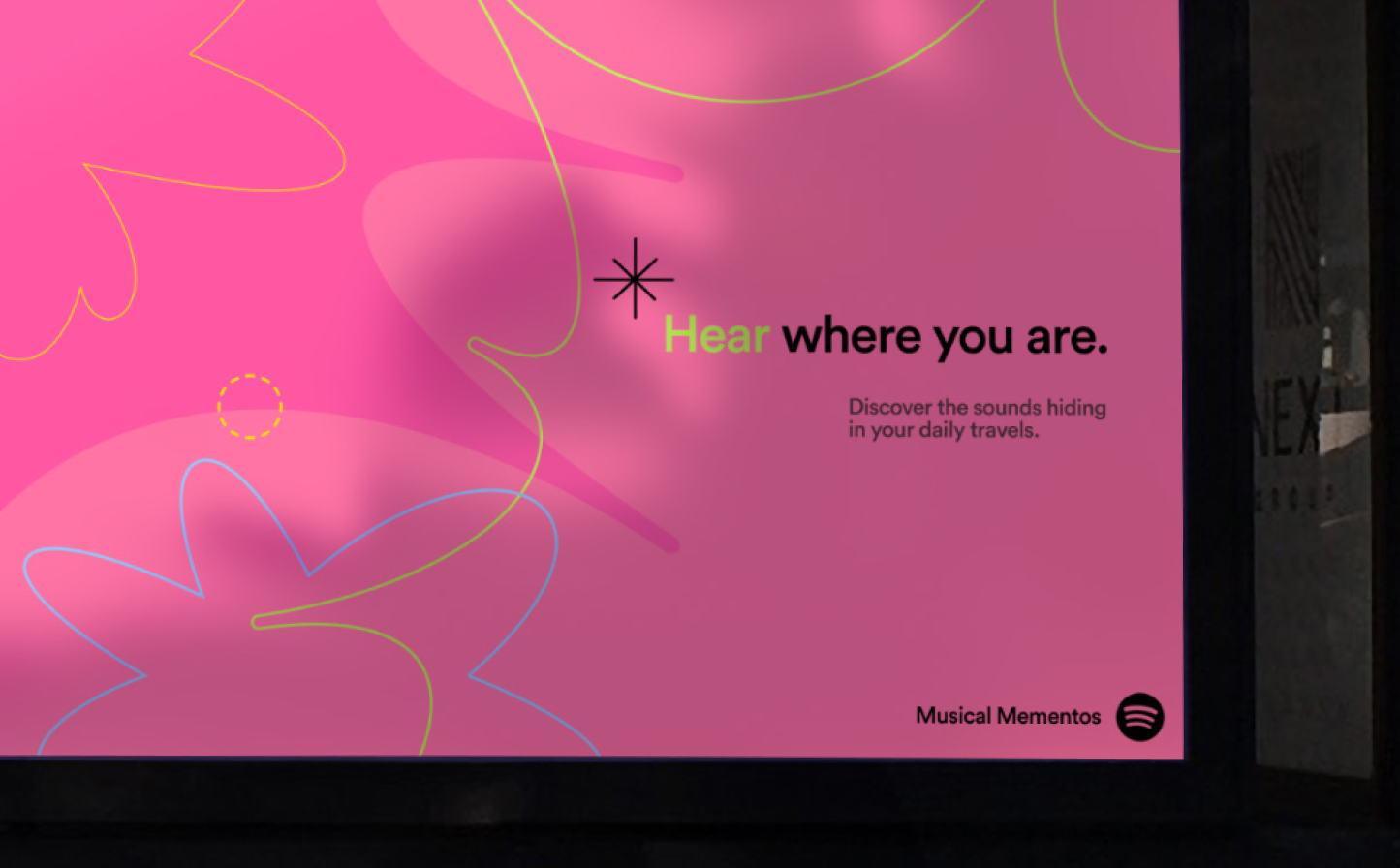
Interactive poster ads intentionally placed in points of transition, like bus stops and subways, reinforce the idea that location influences sound.
Collecting valuable insights
We conducted desk research and analyzed Spotify’s existing features to understand how users currently discover music, as well as where the in-app discovery experience falls short.
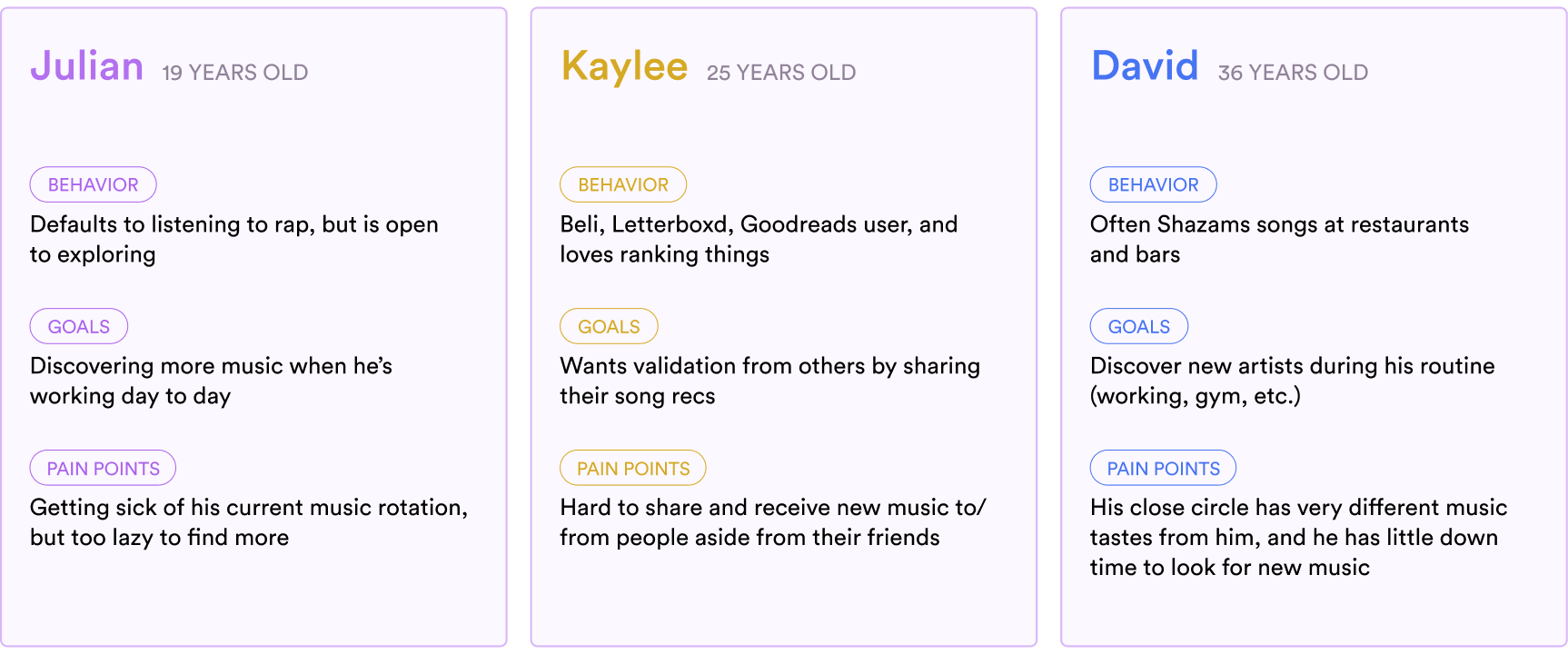
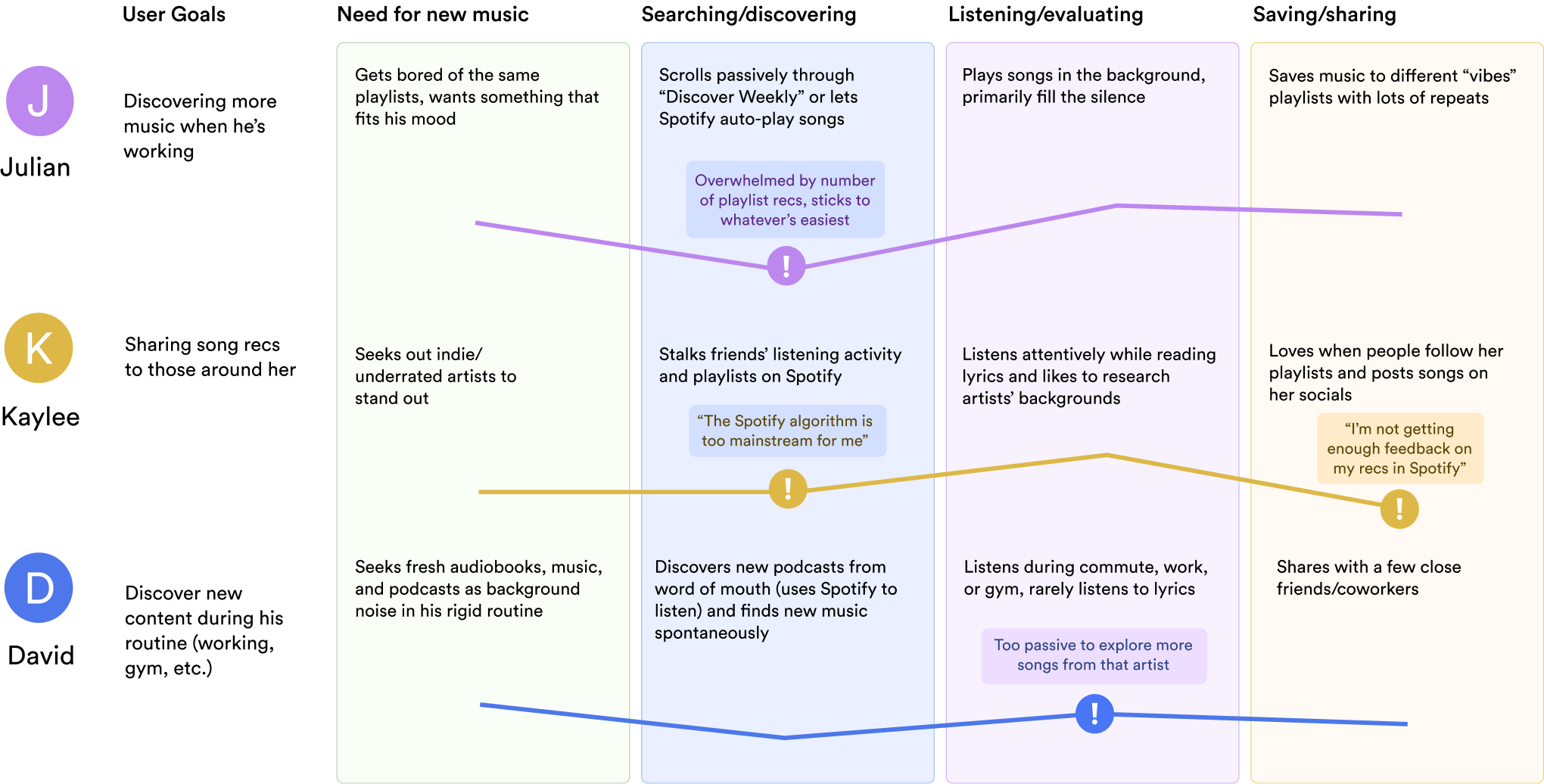
User Personas
We created a variety of user personas to better understand the target users and mapped out their pain points in their existing audio discovery process.
A vivacious deck design
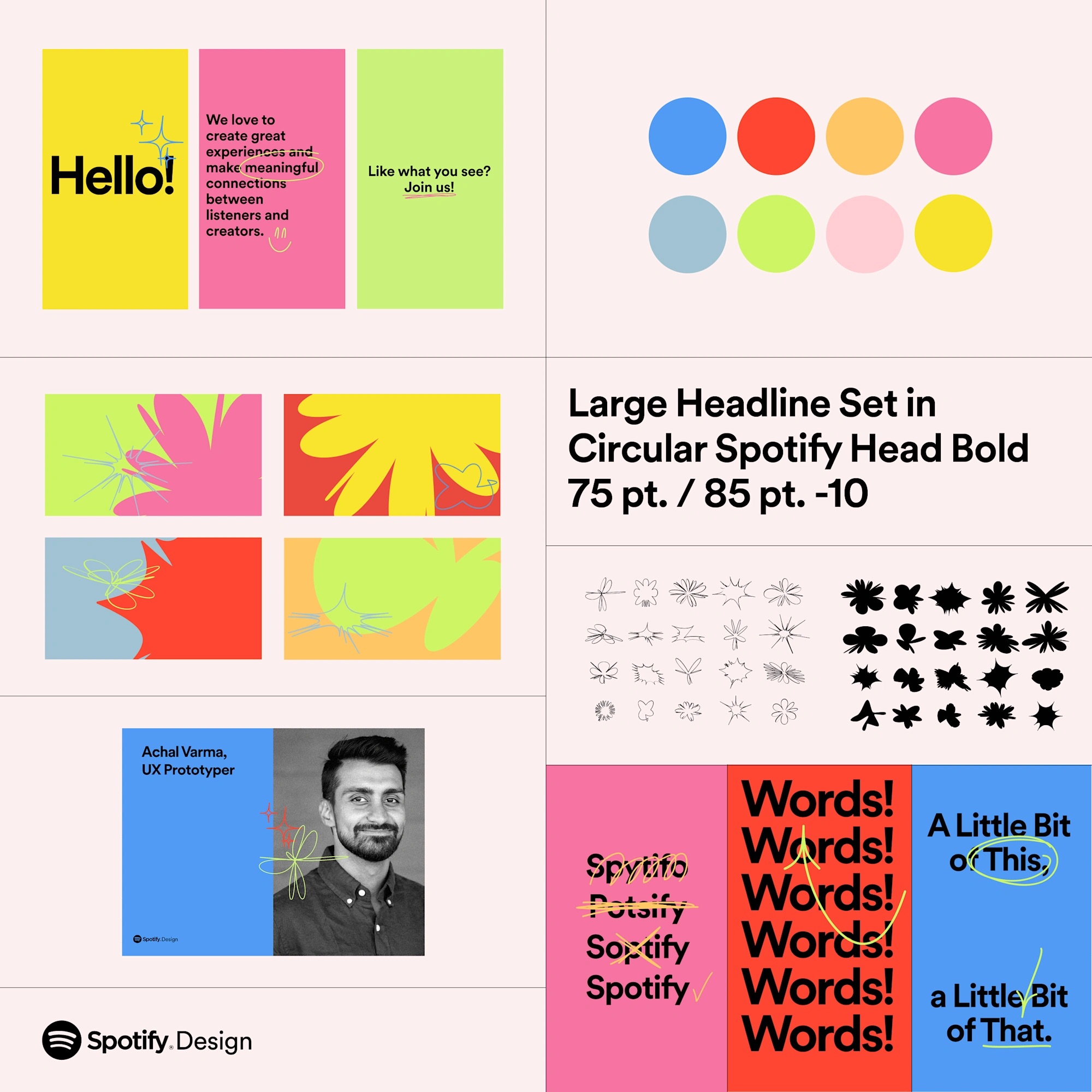
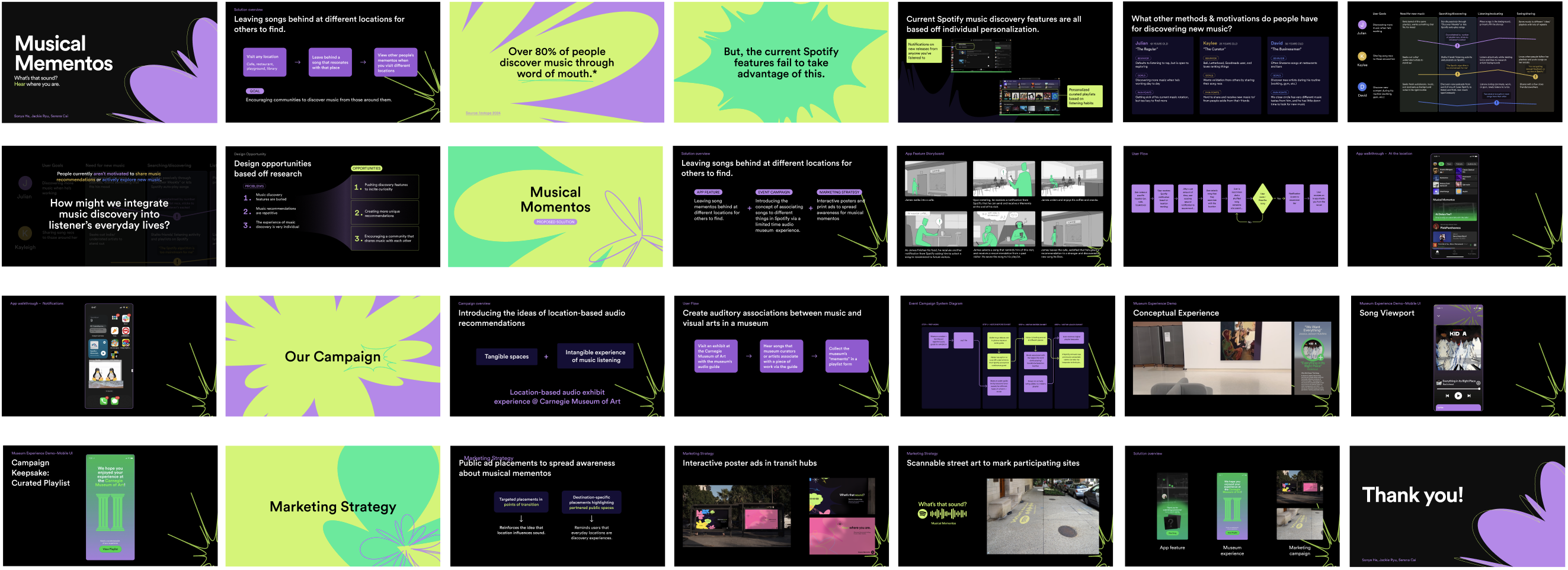
The visual design of our proposed campaign and slide deck was inspired by Spotify Design's playful brand kit, which matches the energy of discovering a completely new genre of music during daily travels.
Reflections
This short project was a blast to work on, especially collaborating with my classmates :] Some important takeaways from this project:
1. Ecosystem building: I learned that consistent storytelling across spaces can make abstract concepts feel more tangible and intuitive. Adapting one core insight into 3 distinct touchpoints, each with a different context, was harder than it seemed!
2. Precise wording: Presenting this project in a pitch format taught me that small changes in wording can significantly affect how the concept is received on the other end.
If I had more time, I'd further explore edge cases in the in-app feature, such as privacy and data settings, repeat visits, and overcrowding in the memento map.